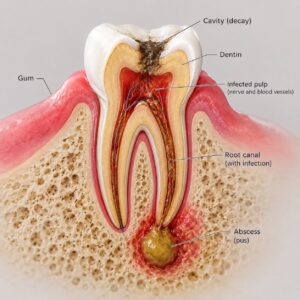
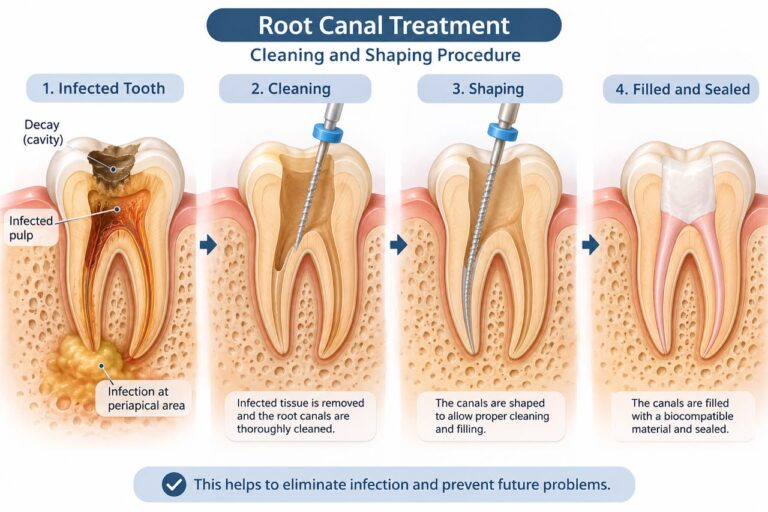
Rootcanaltreatment is a dental treatment designed to eliminate bacteria from the infected root canal, prevent reinfection of the tooth and save the natural tooth.
The term “root canal” comes from cleaning out the canals inside a tooth’s root.
Decades ago, root canal treatments often were painful. With dental advances and numbing medicine known as a local anesthetic, most people now feel little or no pain during a root canal. In fact, it’s probably more painful living with a decayed tooth.
Main Symptoms of Root Canal Infection
Pain from hot/cold foods or drinks
Sensitivity to hot/cold foods or drinks
Pain when tapping the tooth
Persistent or costant pain
Pain when biting or chewing food
Swelling in the gums around the tooth
Primary Causes or Reasons for Root Canal Treatment
Advanced Tooth Cavity
If tooth decay progresses and the infection spreads to the tooth’s nerve, root canal treatment becomes necessary. As the infection advances, it may lead to pain and swelling.
Trauma To Tooth
If a tooth is damaged due to an accident or trauma (eg. knocked front tooth) and the nerve is injured, root canal treatment may be necessary.
Broken Filling
If a large filling or a dental restoration (such as a crown) deteriorates or breaks, allowing bacteria to enter the tooth, the nerve may become infected and inflamed.
Getting started on Root Canal Treatment
Removing Infection
This treatment involves removing the nerves and blood vessels from a tooth, cleaning the inside of the root canal, and placing medicament in the canal to fight the infection. This process eliminates infection and inflammation, making it possible to preserve the tooth.
After the root canal, you may have a short-term filling called a temporary filling. This is placed in the crown to protect the tooth and keep out food bits and saliva. Avoid biting or chewing on the tooth until it’s been permanently treated and restored.
Root Canal Filling
After ensuring all infection has been cleared off and patient do not have any symptoms such as pain or gum swelling, we will then proceed to fill the tooth canal with a specific type of filling ( usually called Gutta Percha).
Final Tooth Filling
The final stage of the root canal is restoring your tooth. The tooth typically has a large filling or is weakened from a large area of decay. The tooth needs to work well again and needs protection from future damage. This is usually done by placing an artificial crown. A crown is a realistic-looking artificial cap that’s placed over the tooth.
A crown typically is made of gold, porcelain or porcelain fused to metal. But other materials may be used. Crowns made of porcelain or porcelain fused to metal can be tinted to match the color of your other teeth. If a lot of the tooth structure is missing, you may need a metal post placed in the tooth for support and to keep the crown in place. Ask your dentist or endodontist about other options for restoring your tooth.
If you leave a tooth requiring root canal treatment untreated...
Neglecting root canal treatment at the dentist can lead to the following types of problems.
Worsening of Pain and Discomfort
Infection or inflammation within a root canal can progress, leading to worsening pain or discomfort. Symptoms such as persistent pain or swelling of the jaw may occur.
Spread of Infection
As the infection progresses, it may spread to the surrounding gum issues and the jawbone.
Tooth Loss
If an infection inside the root canal is left untreated, the condition of the tooth will deteriorate, and severe infection or pathological changes may destroy the bone, potentially requiring tooth extraction.
Impact on other Health Problems
Dental infections and inflammation can affect not only the oral cavity but also one’s overall health. There is a risk that oral infections may spread throughout the body, potentially leading to complications such as heart disease or respiratory conditions.
If you require root canal treatment, it is important to consult a dentist and undergo the procedure as soon as possible. Early treatment allows for the control of infection and inflammation, helping to save the tooth.